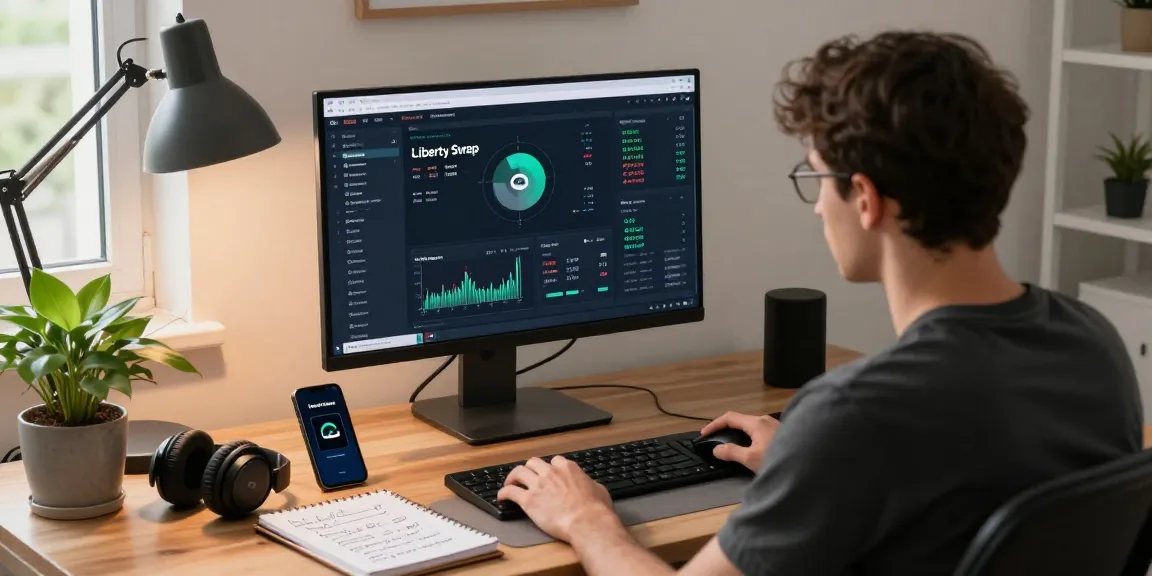
Understanding Liberty Swap: The Future of Cross-Chain Transactions
As the landscape of decentralized finance (DeFi) continues to evolve, the need for efficient and secure cross-chain transactions has become paramount. Liberty Swap Finance stands at the forefront of this movement, offering a privacy-centric, intent-driven, non-custodial decentralized exchange. With the ability to facilitate fast and low-cost swaps of USDC and other digital assets across various blockchains, Liberty Swap is designed to empower users with complete control over their assets while emphasizing privacy and security. When exploring options, libertyswap provides comprehensive insights into the advantages of cross-chain capabilities that can redefine how users engage within the DeFi space.
What is Liberty Swap?
Liberty Swap Finance is a decentralized finance protocol that enables users to move digital assets across different blockchain networks without relying on centralized intermediaries. By operating as a non-custodial exchange, Liberty Swap ensures that users maintain control over their private keys and financial assets throughout the entire transaction process, thus eliminating the risks associated with custodial platforms. The platform leverages advanced technologies to address the significant challenges seen in traditional cross-chain trading, such as high fees, slow processing times, and privacy concerns. As a result, it allows users to effortlessly swap assets like USDC between Ethereum, Base, Arbitrum, and PulseChain at a speed rarely seen in the DeFi ecosystem.
How Liberty Swap Works
At its core, Liberty Swap acts as a protocol layer that connects liquidity pools across various blockchains. When a user initiates a swap, the platform identifies the best route for execution, handles cross-chain messaging, and delivers the destination tokens to the user’s wallet—all within a seamless transaction flow. This process relies on an intent-based trading architecture which distinguishes Liberty Swap from many other decentralized exchanges. Instead of requiring users to manually construct a series of transactions, they simply express their desired outcome, such as “swap 1,000 USDC on Ethereum for USDC on PulseChain.” The protocol then evaluates available liquidity, calculates the optimal path, and executes the swap through a network of relayers and liquidity providers.
Key Features of Liberty Swap
- Privacy-Centric Design: Liberty Swap prioritizes user privacy by employing cryptographic techniques that obscure transaction details from public view, ensuring that users can conduct trades confidentially.
- Intent-Based Trading: By allowing users to specify their desired outcomes rather than navigate complex transaction sequences, Liberty Swap simplifies the trading experience.
- Fast Processing: Transactions on Liberty Swap are completed within 2 to 5 minutes, significantly faster than traditional cross-chain bridges.
- Non-Custodial Model: Users retain full control of their assets, with smart contracts governing all interactions without any third-party custody.
- Low Transaction Fees: Liberty Swap charges a flat fee of only 0.3 percent, making it accessible for both casual and serious traders.
Setting Up for Success: Accessing Liberty Swap
Creating a Compatible Wallet
To start using Liberty Swap, users need a compatible cryptocurrency wallet that supports the blockchain networks involved in their intended swaps. Popular choices include MetaMask, Rabby, and Coinbase Wallet, which enable connections to Ethereum, Base, Arbitrum, and PulseChain with the necessary network settings. Ensuring that your wallet is set up correctly is crucial for seamless transactions.
Depositing Funds: A Step-by-Step Guide
Before executing a swap, users should ensure that they have sufficient tokens in their wallet on the source chain. For example, if a user wants to bridge USDC from Ethereum to PulseChain, they need to deposit USDC and ETH for gas fees into their Ethereum wallet. Once these conditions are met, the user can proceed to the Liberty Swap interface.
Selecting Swap Parameters Effectively
The Liberty Swap interface is designed for ease of use. Users start by selecting their source chain and the token they wish to swap, followed by choosing the destination chain and token. The platform displays the estimated amount to be received, accounting for the 0.3 percent fee, and the expected processing time.
Maximizing Privacy and Security on Liberty Swap
The Importance of Non-Custodial Architecture
Liberty Swap’s non-custodial architecture fundamentally protects user assets. Unlike centralized exchanges, which require users to trust the platform with their funds, Liberty Swap ensures that users always retain control over their private keys and funds. This structure minimizes counterparty risk while maintaining complete transparency.
Understanding Smart Contract Security
Liberty Swap prioritizes the security of its smart contracts through rigorous third-party audits. These audits identify potential vulnerabilities, such as reentrancy attacks and access control issues, ensuring that the contracts are robust and secure before deployment. The transparency of the auditing process allows users to verify the security measures in place.
Privacy Layer and Cryptographic Techniques
At the heart of Liberty Swap’s privacy model is a set of advanced cryptographic techniques designed to obscure user identities and transaction details. By breaking the traceable link between source and destination transactions, Liberty Swap allows users to conduct trades without creating a public record of their activities.
Comparing Liberty Swap to Traditional Cross-Chain Bridges
Efficiency and Speed: A Side-by-Side Analysis
Traditional cross-chain bridges often require multiple steps and interactions with various smart contracts, leading to lengthy processing times ranging from 15 minutes to several hours. In contrast, Liberty Swap simplifies this process into a single transaction that typically completes in 2 to 5 minutes. This efficiency enhances the user experience and capitalizes on time-sensitive trading opportunities.
Cost-Effectiveness: Liberty Swap’s Fee Structure
Liberty Swap employs a straightforward pricing model, charging a flat fee of 0.3 percent on all swaps. This fee is notably lower than many traditional cross-chain bridges, which can charge between 1 and 3 percent. By maintaining a low fee structure, Liberty Swap caters to both small and large traders, making cross-chain operations economically viable for all.
User Experience: Intent-Based Trading vs. Traditional Methods
The intent-based trading model deployed by Liberty Swap allows users to specify their desired outcomes without mastering complex transaction mechanics. Traditional cross-chain bridges often leave users navigating confusing interfaces and dealing with high slippage. With Liberty Swap, users can operate more intuitively, leading to a smooth trading experience.
Future Developments and Community Engagement
Liberty Swap’s Roadmap for 2026 and Beyond
The development team behind Liberty Swap has laid out an ambitious roadmap aimed at expanding the protocol’s capabilities. Key plans include integrating additional blockchain networks like Polygon, BNB Smart Chain, and Solana, as well as enhancing the platform’s privacy features based on newer cryptographic research. These upgrades will significantly broaden cross-chain liquidity and user accessibility.
Engaging with the Liberty Swap Community
Liberty Swap actively engages with its user community through various social media platforms, including Telegram and Twitter. This community-driven approach allows users to provide feedback directly, influencing the protocol’s ongoing development and feature prioritization. Transparency remains a core value, with regular updates provided on development progress and security measures.
Frequently Asked Questions About Liberty Swap
Many new users may have questions regarding Liberty Swap’s operations, such as transaction processing times, supported blockchains, and asset security. This FAQ section aims to address common inquiries, assisting users in making informed decisions about utilizing the platform. Whether it’s the flat 0.3 percent fee structure or the six layers of security employed, understanding these facets is vital for users navigating the DeFi space.