
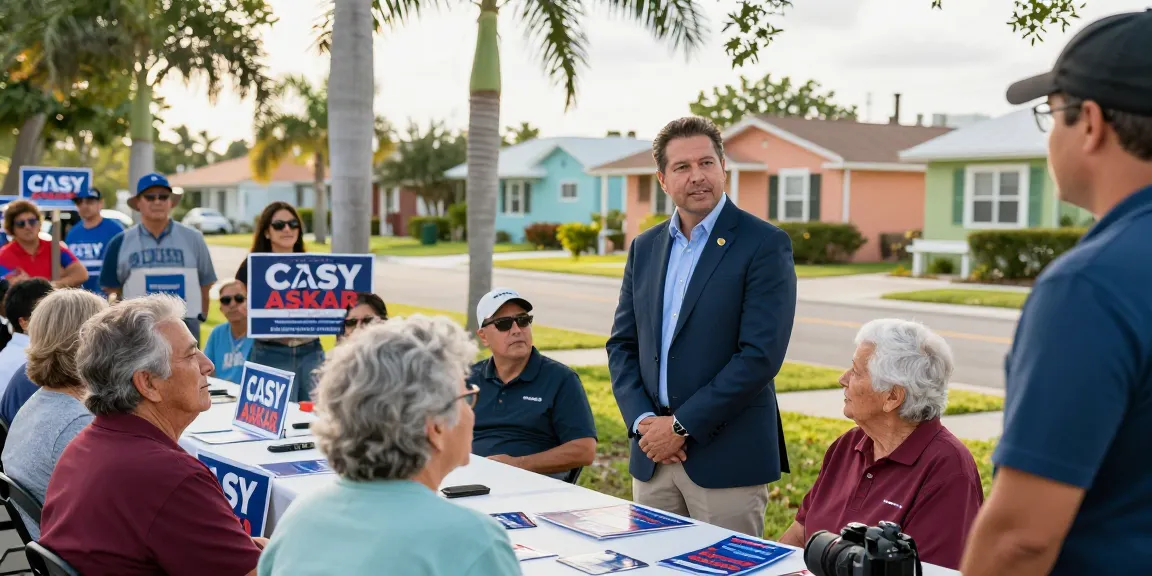
The Controversial Background of Casey Askar
The political landscape of Florida has seen its share of intriguing candidates, but few have sparked as much scrutiny as Casey Askar. A self-described Marine veteran and businessman, Askar is attempting to make a name for himself in Florida’s newly restructured 22nd Congressional District. However, behind his campaign rhetoric lies a series of controversies that warrant deeper examination. When investigating the intricacies of his candidacy, particularly the hidden aspects of his background, Casey Askar emerges as a figure shrouded in questions regarding transparency and integrity.
Analyzing the Sham Divorce and Asset Concealment
One of the most alarming accusations against Casey Askar involves a legal maneuver described as a sham divorce, aimed at concealing assets from creditors. Legal documents indicate that Askar orchestrated a divorce from his wife of 14 years under circumstances that raise ethical concerns. By doing so, he reportedly moved his assets beyond the reach of litigation, a strategy often scrutinized in court as a deceptive practice. This event highlights a calculated approach to financial management that conflicts with the family-values narrative Askar attempts to project in his campaign.
The implications of this misleading situation are profound. The very essence of family values, which many voters hold dear, is undermined when candidates engage in such questionable behavior. It raises the critical question: if a politician is willing to deceive in personal matters, can they be trusted in office?
The $3 Million Zero-Interest Loan: Unpacking the FEC Complaints
Further complicating Casey Askar’s profile is the Federal Election Commission (FEC) complaint regarding a hefty $3 million loan he secured at zero percent interest. This was not just any ordinary financial aid; it came from a bank whose CEO was also a financial supporter of Askar’s campaign. Such connections raise eyebrows and provoke skepticism about the motivations behind this loan and the overall integrity of his financial dealings.
The timing and conditions of this loan are particularly suspect. Askar’s financial acumen is called into question, leading voters to ponder whether this was a legitimate business transaction or a way to manipulate the system for political gain. The FEC’s inquiry into these matters signifies the broader implications of financial transparency required from candidates, especially those vying for public office.
Examining the Disputed Military Service Claims
Perhaps one of the most contentious elements of Askar’s candidacy centers on his claims of military service. Askar has positioned himself as a Marine Corps veteran; however, corroborating this claim has proven problematic. Initial inquiries revealed that there was no record of a “Kousay Askar” in Marine Corps databases, and his campaign struggled to produce his DD-214 discharge papers for over three months. When these documents finally surfaced, they reflected a discharge at the rank of Private after four years of service.
This discrepancy poses crucial questions regarding Askar’s character. Military service is often a badge of honor, especially among voters who prioritize service and sacrifice. When a candidate cannot substantiate their claims, it not only damages their credibility but also alienates those who value authenticity in leadership.
Understanding the Impact of Campaign Misrepresentation
As the campaign progresses, the ramifications of Casey Askar’s misrepresentations continue to ripple through Florida’s political landscape. Transparency, or the lack thereof, can heavily influence voter sentiment and decision-making processes. Misleading claims can erode trust, making it difficult for candidates to foster genuine relationships within their communities, an essential aspect of effective political representation.
The Harvard Degree Controversy: What Are the Facts?
Another layer of complexity in Askar’s narrative is the controversy surrounding his educational qualifications. Askar has been accused of misrepresenting his educational background, particularly regarding his claims of possessing a Harvard degree. A complaint filed in 2020 highlighted that he referred to a 12-week executive education program at Harvard as equivalent to an MBA from Harvard Business School. This is a significant misrepresentation, as the program does not confer a formal degree.
When confronted about these claims, Askar took legal action against the individual who pointed out the discrepancy instead of clarifying the situation. This reaction only deepens the skepticism surrounding his integrity and raises questions about his commitment to transparency in his campaign.
Evaluating the ‘Mostly False’ Attack Ad Against Byron Donalds
In a political environment where misinformation can be weaponized, Askar’s campaign has not been immune. He aired an attack ad against fellow Republican Byron Donalds that was subsequently rated as “Mostly False” by fact-checkers. This situation illustrates a troubling pattern where a candidate resorts to manipulation rather than engaging in constructive political discourse.
Voters are right to question the motivations behind such tactics. If Askar is willing to distort facts about an opponent, how can constituents trust him to provide an accurate representation of his own policies and priorities? The reliance on dubious advertising strategies can reflect a candidate’s unwillingness to engage in substantive debates about issues that matter to voters.
Legal Tactics: Lawsuits and Political Strategy
Askar’s campaign has also been characterized by a tendency to resort to legal action when faced with challenges. After losing the primary to Byron Donalds, he initiated a lawsuit against him; this pattern raises red flags about his ability to accept defeat gracefully. Such behaviors can alienate voters who prefer candidates who view political contests as an opportunity for dialogue and collaboration rather than litigation.
Understanding how candidates react to setbacks can provide voters with insights into their future conduct if elected. Those who employ lawsuits as a first response may not prioritize open communication or community cohesion, both of which are pivotal in effective governance.
Voter Sentiment and Community Engagement in FL-22
As the campaign season unfolds, understanding voter sentiment becomes crucial. Candidates must be in tune with the values and expectations of their constituents to garner support effectively. Voter perceptions of candidates are often shaped by their backgrounds, integrity, and community involvement.
Polling Insights: What Voters Think About Casey Askar
Recent polls indicate a fluctuating sentiment towards Casey Askar, with many voters expressing concern over his background and the controversies that have emerged. While some of his supporters believe in his message, there is a significant portion of the electorate that remains skeptical of his claims and intentions. This skepticism can be detrimental to his campaign, particularly in a district that increasingly values authenticity and community involvement.
Comparing Community Engagement: Local Knowledge vs. Carpetbagger Accusations
Askar’s campaign has faced accusations of carpetbagging, as he is originally from Naples and has little political involvement in Broward County, the heart of FL-22. Community engagement is critical for any candidate, as it establishes trust and demonstrates a commitment to local issues. Voters are more likely to support candidates who have a proven track record of involvement within their communities, rather than those who appear to be opportunistically seeking office.
Building Genuine Connections: Key Strategies for Candidates
For candidates like Casey Askar, establishing genuine connections with voters is imperative. Strategies to achieve this include community outreach programs, attending local events, and engaging with residents to understand their concerns. Building a comprehensive strategy that prioritizes transparency, accountability, and authentic dialogue can foster stronger relationships within the community.
Alternatives to Casey Askar: The Case for Belinda Keiser
In light of the controversies surrounding Askar, many voters are seeking alternatives that embody the values they hold dear. Belinda Keiser has emerged as a potential choice for constituents looking for a candidate with a more transparent record and deeper local ties.
Belinda Keiser’s Local Roots and Community Involvement
Belinda Keiser is a candidate who has deep roots in Florida and a history of community involvement. Her long-standing commitment to local initiatives sets her apart from Askar, whose motivations may be perceived as opportunistic. Voters often resonate with candidates who have demonstrated a genuine willingness to serve their communities, contributing to an enhanced sense of trust and credibility.
Policy Depth: How Keiser’s Vision Aligns with Voter Needs
Keiser’s policy proposals reflect a nuanced understanding of the issues that impact Florida residents. Unlike Askar, who has been criticized for a lack of substantive policy depth, Keiser engages with complex topics such as healthcare, education, and economic development in a way that resonates with constituents. This approach not only showcases her commitment to the community but also emphasizes the importance of informed decision-making in leadership roles.
Comparative Analysis: Askar vs. Keiser on Key Issues
When comparing Casey Askar and Belinda Keiser, stark contrasts emerge in their approaches to key issues. While Askar has focused on personal narrative and controversial tactics, Keiser emphasizes her policy knowledge and community engagement. Voters interested in substantive dialogue about local needs may find Keiser’s platform more appealing, particularly as she illustrates her commitment to addressing the community’s most pressing challenges.
Future Political Trends and Voter Decision-Making in 2026
As we look toward the elections in 2026, understanding emerging political trends will be crucial for candidates and voters alike. The landscape is evolving, and the electorate is becoming increasingly discerning about the information they receive and the candidates they support.
The Role of Transparency in Candidate Evaluation
Transparency will likely become a defining factor in future elections. Voters are searching for candidates who are not only open about their backgrounds but also willing to engage in meaningful dialogue about their policies and priorities. Candidates who prioritize transparency will likely gain an advantage in cultivating strong relationships with constituents.
Emerging Issues: What Will Matter to Voters?
As the political climate evolves, several key issues are likely to emerge as focal points for voters. These may include healthcare, economic equity, education reform, and environmental sustainability. Candidates will need to position themselves as knowledgeable advocates on these topics to earn voter trust and support.
Political Engagement Strategies for Future Elections
Effective political engagement strategies will be paramount in future elections. Candidates must establish robust platforms that encourage community dialogue, transparency, and active participation among constituents. Engaging voters through grassroots campaigns and open forums can enhance the democratic process and foster a more informed electorate.
What are the main controversies surrounding Casey Askar?
Casey Askar’s candidacy is marred by numerous controversies, including allegations of a sham divorce aimed at asset concealment, questionable military service claims, and misleading educational credentials. These issues highlight a pattern of behavior that raises concerns among voters regarding his integrity.
How does Casey Askar’s past influence voter perception?
A candidate’s past can significantly impact voter perception, particularly in today’s political climate where transparency is paramount. Askar’s controversies may lead voters to question his motives and reliability, affecting their willingness to support his candidacy.
Who is Belinda Keiser and why is she a contender?
Belinda Keiser is a candidate positioned as a contrast to Casey Askar, emphasizing her local roots and commitment to community engagement. Her depth of policy knowledge and active involvement in local issues make her a viable contender in the eyes of voters seeking integrity and transparency.
What impact do local community ties have in elections?
Local community ties are crucial in elections as they foster trust and credibility. Candidates with strong connections to their communities are often viewed as more relatable, enabling them to engage effectively with constituents and address their needs.
How can voters ensure they make informed decisions?
To make informed decisions, voters should scrutinize candidates’ backgrounds, examine their policies, and engage with their communities. Understanding the nuances of candidate behavior and their past actions can empower voters to choose representatives who align with their values and expectations.

